
South Carolina Death Records
South Carolina death records are official documents that confirm a person's passing and contain details such as the full name, date of death, place of death, and cause of death. The SC Department of Public Health maintains these records and handles most requests from the public. Searching for death records in South Carolina can help families confirm facts, settle estates, and trace ancestry. This guide covers how to find and obtain death records across the state, including the offices and online tools available to help you get started.
South Carolina Death Records Quick Facts
South Carolina Death Records
South Carolina has maintained statewide death records since January 1, 1915. The SC Department of Public Health (DPH) serves as the central authority for vital records in the state. DPH was formerly known as DHEC until June 2024, so older references to DHEC still apply to the same agency and the same records. The state office is located at 2600 Bull St., Columbia, SC 29201 in Richland County. You can reach the office by phone at (803) 898-3630 during regular business hours.
A death record in South Carolina takes one of two forms. A certified death certificate is the full document and includes all details filed at the time of death. A death statement is a limited version that provides only the name, county, and date of death. Which form you can receive depends on your relationship to the deceased and how long ago the death occurred. Records that are more than 50 years old are available to the general public. Newer records are restricted to immediate family members and their legal representatives.
The SC DPH death certificates page is the starting point for most requests. It covers ordering methods, office locations, and what to expect from each process. The screenshot below shows the main page at DPH.
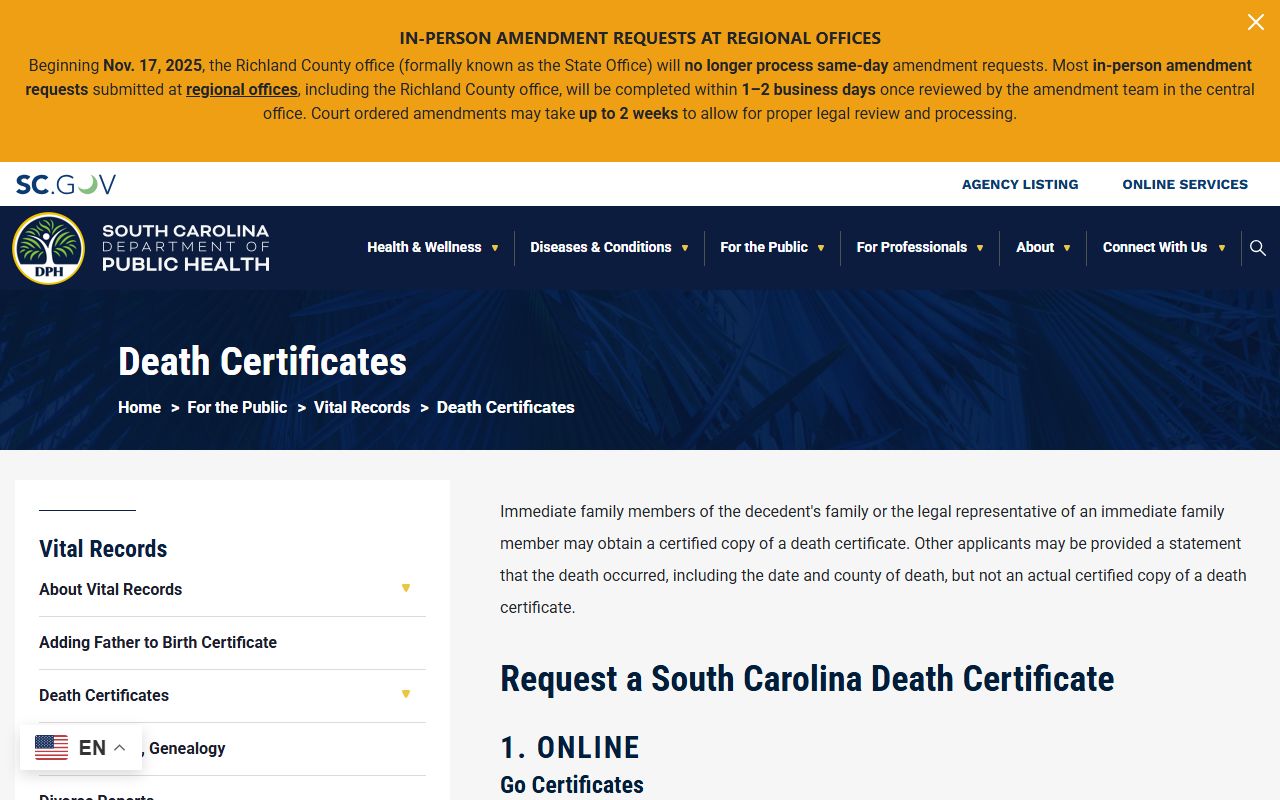
The DPH death certificates page provides links to order online, by mail, or in person and also lists what documents you will need to bring or include with your request.
How to Get a South Carolina Death Certificate
There are four ways to order a South Carolina death certificate: in person, by mail, by drop-off, or online through an authorized vendor. Each method has its own processing time and cost. Knowing which option fits your situation can save a lot of time.
In-person requests at a DPH office are the fastest. Same-day service takes about 30 to 45 minutes. The state office in Columbia is open Monday, Tuesday, Thursday, and Friday from 8:30 am to 5:00 pm. On Wednesdays, the office opens at 9:30 am and closes at 5:00 pm. Mail requests take about four weeks and cost $12. Drop-off requests are processed in two business days. Online orders placed through GoCertificates.com or VitalChek.com typically arrive in five to seven business days. VitalChek can also be reached by phone at 1-877-284-1008, available 24 hours a day, seven days a week.
Fees vary by method. Mail requests are $12 and that fee is non-refundable. In-person, online, and expedited requests cost $17 each. Additional copies ordered at the same time are $3 each. Third-party vendors like VitalChek add a service fee ranging from $8.70 to $12.85 on top of the base cost. The fee schedule is published on the DPH website.
The screenshot below is taken from the DPH fee schedule page, which lists all current costs for death certificates and other vital records.
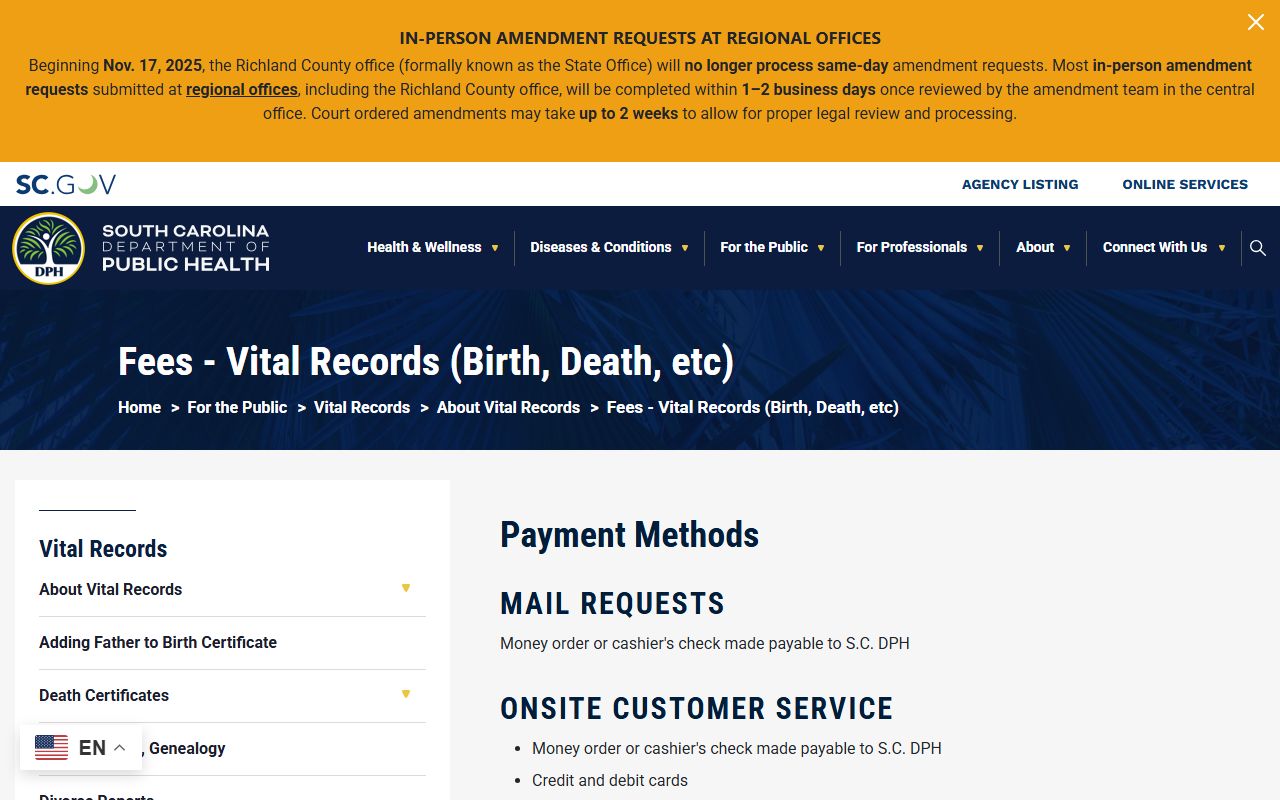
Checking the fee page before you submit your request helps avoid surprises, since costs may be updated over time by the state.
Note: Mondays, Fridays, and the hours around lunch tend to be the busiest times at DPH offices. Visiting Tuesday through Thursday between 9 am and 11 am usually means a shorter wait.
Who Can Request Death Records in South Carolina
Not everyone can obtain a full certified death certificate in South Carolina. The state limits access to protect the privacy of families and to prevent fraud. Understanding who qualifies makes the process much smoother.
For records less than 50 years old, only immediate family members and their authorized representatives may receive a certified copy. Immediate family includes spouses, parents, children, siblings, and grandparents of the deceased. Legal representatives such as attorneys acting on behalf of a qualifying family member may also request records. Anyone else who needs information about a recent death can receive a death statement, which is a limited document that shows only the name, county, and date of death.
All requesters must provide valid photo identification. Acceptable forms include a government-issued ID, a school ID, or an employer-issued photo ID, as outlined in Section 44-63-161 of the South Carolina Code of Laws. The ID must be current and valid at the time of the request. The DPH ID requirements page lists exactly what will and will not be accepted.
The screenshot below shows the DPH ID requirements page, which details what types of identification are accepted for vital records requests.
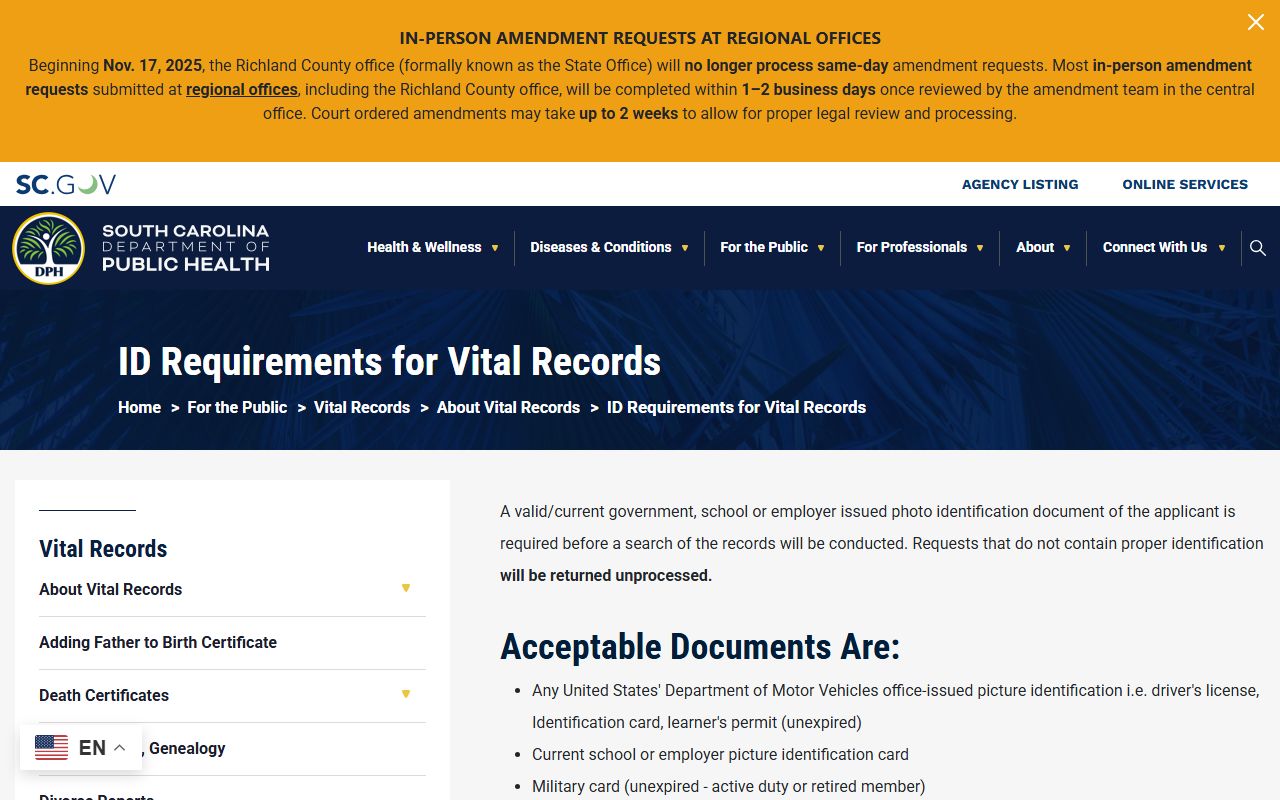
Reviewing the ID requirements page before your visit can save you a trip if you are not sure what forms of identification are currently accepted.
Once a death record is more than 50 years old, it becomes available to the general public without the family relationship requirement. This rule is part of Section 44-63-84 of the SC Code of Laws. At that point, any person may request a certified copy by paying the standard fee and providing valid ID.
South Carolina Death Records Laws
Several sections of the South Carolina Code of Laws govern how death records are created, stored, and released. These laws are found in Title 44, Chapter 63, which covers vital records broadly. The full text is at the SC Legislature website.
Section 44-63-74 sets the rules for filing death records. It requires electronic filing and sets a five-day deadline for submitting a death certificate after a death occurs. Medical certification must be completed within 48 hours. Failure to meet these deadlines can result in penalties for funeral homes and medical certifiers. The law has required electronic filing for all deaths since 2022, following the passage of H.3325.
Section 44-63-84 addresses who may receive certified death certificates. It establishes the 50-year rule that limits access to recent records. Family members and their legal representatives are the qualifying parties for newer records. This same section permits the general public to request records that have passed the 50-year mark.
Section 44-63-161 makes it a felony to submit false information on a death certificate or to fraudulently obtain one. Violations can result in fines up to $10,000 and up to five years in prison. This is why photo identification is required for every request, no matter how the order is placed.
The screenshot below shows the SC Code of Laws page for Title 44, Chapter 63, where all of these statutes are published in full.
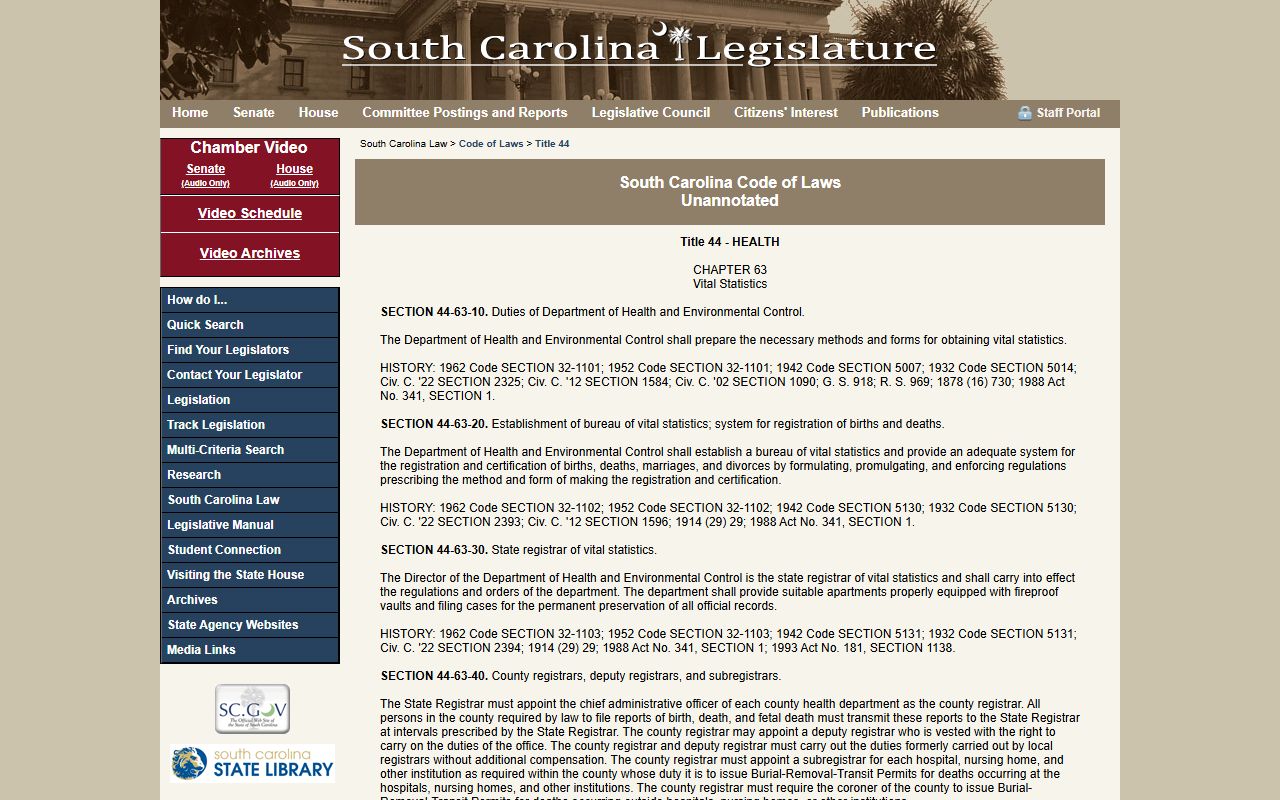
Reading the statutes directly is useful if you need to understand the exact legal language around death records access, correction, or certification in South Carolina.
Section 44-63-150 covers how corrections can be made to existing certificates. If a correction is submitted more than one year after the original filing date, the updated certificate must be marked "amended." This means the corrected version is valid but will show that it was changed after the original filing.
Filing and Certification Requirements for South Carolina Death Records
South Carolina moved to mandatory electronic filing of death certificates in 2022. This change came through legislation and applies to all deaths occurring in the state. Funeral homes and medical certifiers use the state's Web Death System to submit records electronically.
The five-day filing deadline applies to all death certificates. Medical certifiers, such as the attending physician or medical examiner, must complete their portion within 48 hours of the death. The funeral home or registrant then has until the end of the five-day window to submit the completed certificate. Late filing carries financial penalties.
Penalties for late filing start at $250 for a first violation. A second violation costs $500. A third or subsequent violation costs $1,000. If the penalty is paid within 30 days, the amount is reduced by 50%. These rules are designed to keep the state's vital records current and accurate.
The screenshot below is from the DPH page on electronic filing requirements for death certificates.
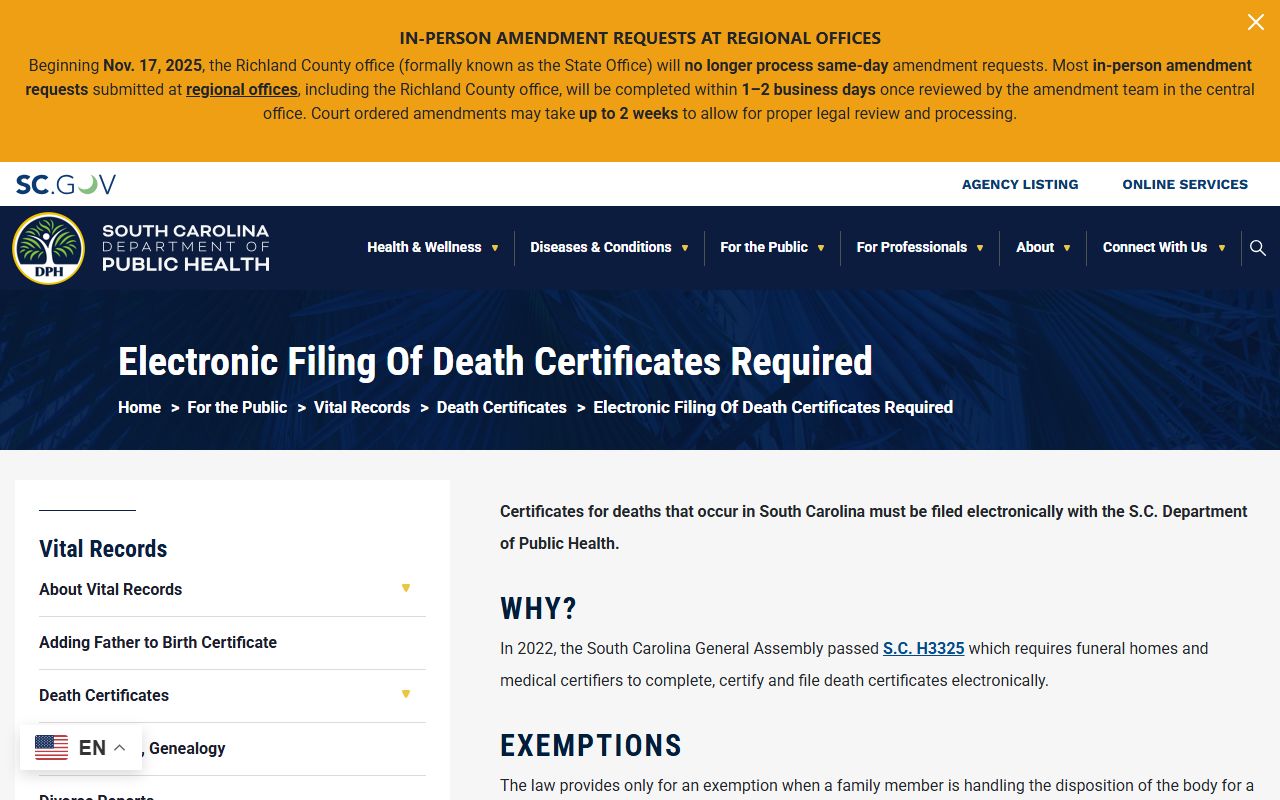
This page explains what systems are used, what is required of each party in the filing process, and where to find technical help for the Web Death System.
The DPH also publishes a FAQ page specifically for the Web Death System. This resource helps funeral homes and medical facilities understand the technical steps for electronic submission.
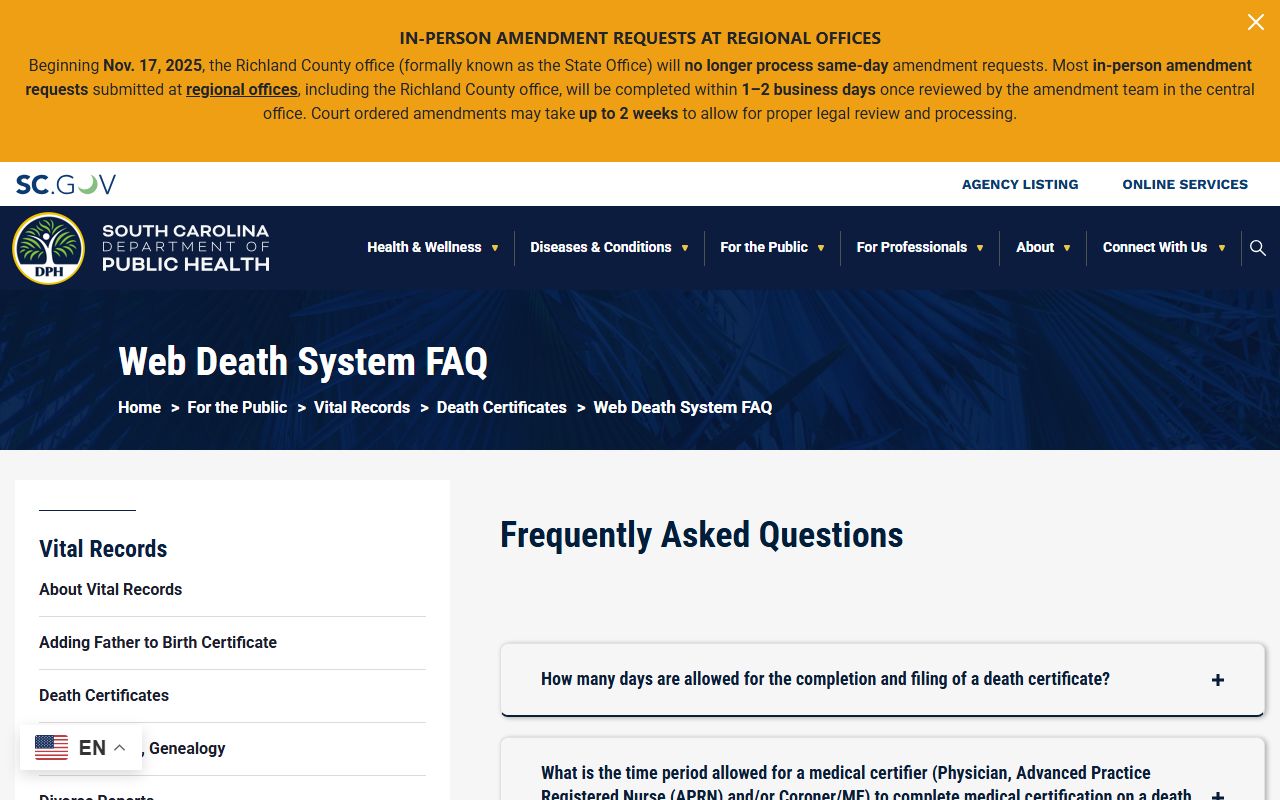
The FAQ addresses common questions about login, certificate status, corrections, and what to do when a record is rejected by the system.
Late filing penalties are documented on a separate DPH page for those who need to understand the cost of missing the five-day deadline.
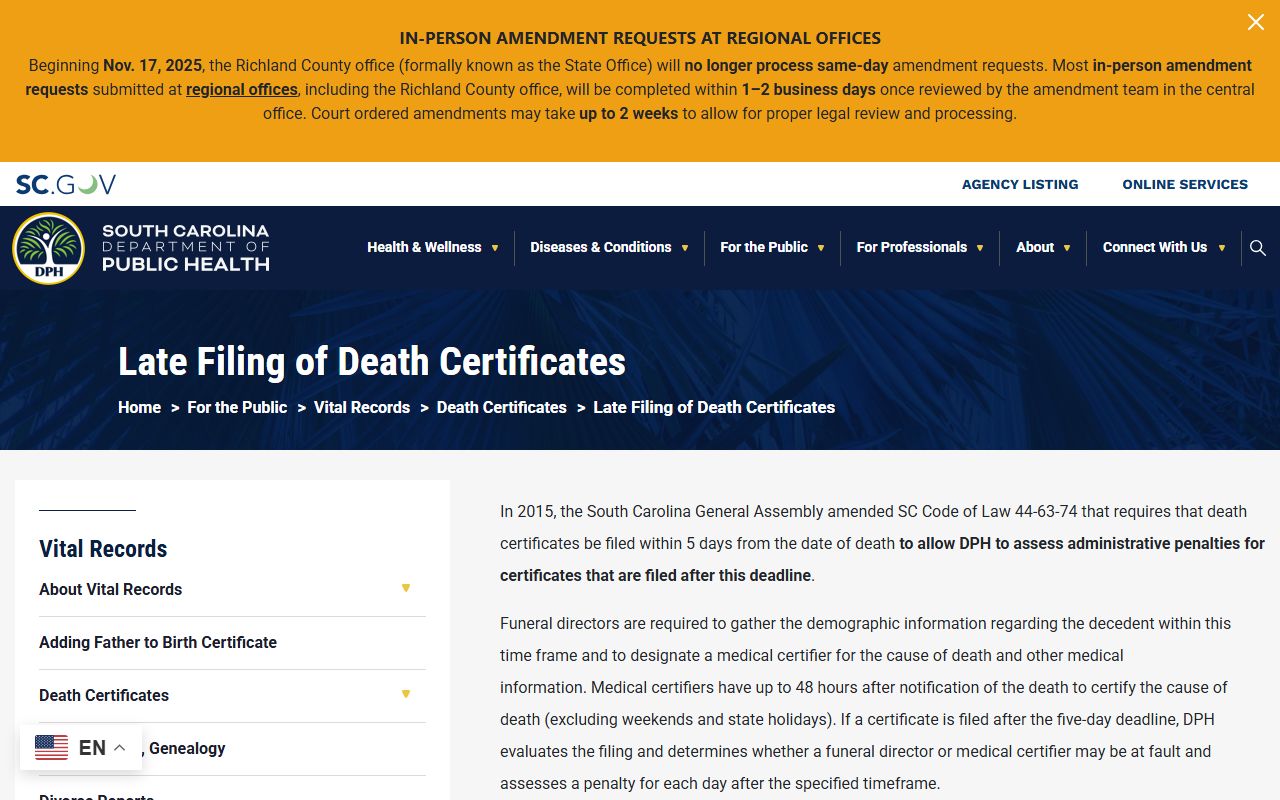
The late filing page lays out the penalty schedule and explains the 50% reduction available when fines are paid promptly within 30 days of the violation notice.
Note: As of November 17, 2025, the Richland County office in Columbia no longer processes same-day amendments to death certificates. Amendments now follow the standard processing timeline at that location.
South Carolina Vital Records Regional Offices
South Carolina has 16 regional vital records offices spread across the state. These offices serve residents who prefer to request death certificates in person rather than by mail or online. Each office handles the same core services as the main Columbia location.
The 16 regional offices are located in Beaufort, Charleston, Hampton, Orangeburg, Aiken, Richland (state office), York, Chesterfield, Florence, Georgetown, Horry, Sumter, Anderson, Greenville, Greenwood, and Spartanburg counties. If you live in one of those counties, visiting the regional office can be faster than going to Columbia. If your county does not have a regional office, the Columbia location and mail or online options are your best choices.
The DPH website publishes a full list of office locations with addresses, hours, and phone numbers. Hours may vary by location, so checking the list before you travel is a good idea. The state office in Columbia follows its posted schedule, but regional offices sometimes differ.
The screenshot below shows the DPH office locations page, which lists all 16 regional offices and their contact details.
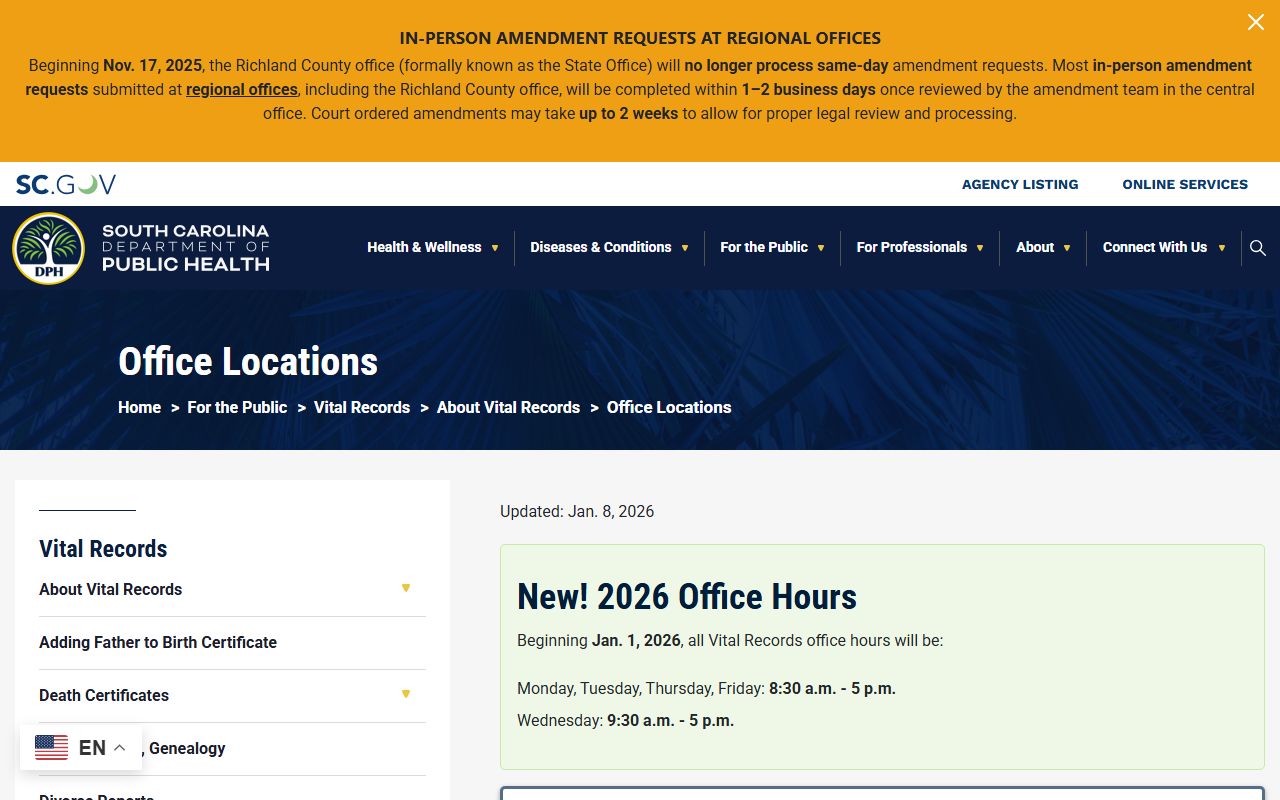
Finding your closest regional office can significantly reduce travel time. Many South Carolina residents are within an hour of at least one DPH vital records location.
Historical Death Records in South Carolina
State-level death records in South Carolina begin on January 1, 1915. For deaths before that date, other sources must be used. Genealogy researchers working on South Carolina families often need to look beyond the DPH to find older records.
The South Carolina Department of Archives and History (SCDAH) holds historical death records from 1915 through 1963 alongside the DPH. The SCDAH is located at 8301 Parklane Road, Columbia, SC 29223, and can be reached by phone at (803) 896-6100. Their website at scdah.sc.gov provides information on what records are available and how to access them. For researchers, the archives hold a wide range of records beyond vital statistics, including wills, land records, and church records that can supplement death research.
For deaths before 1915, county-level records may be the best source. Local churches, cemeteries, and historical societies often kept records that predate state registration. County courthouses may also hold estate records, wills, and probate filings that document deaths going back to the colonial era.
The screenshot below shows the SC Department of Archives and History website, which is a key resource for historical death records in South Carolina.
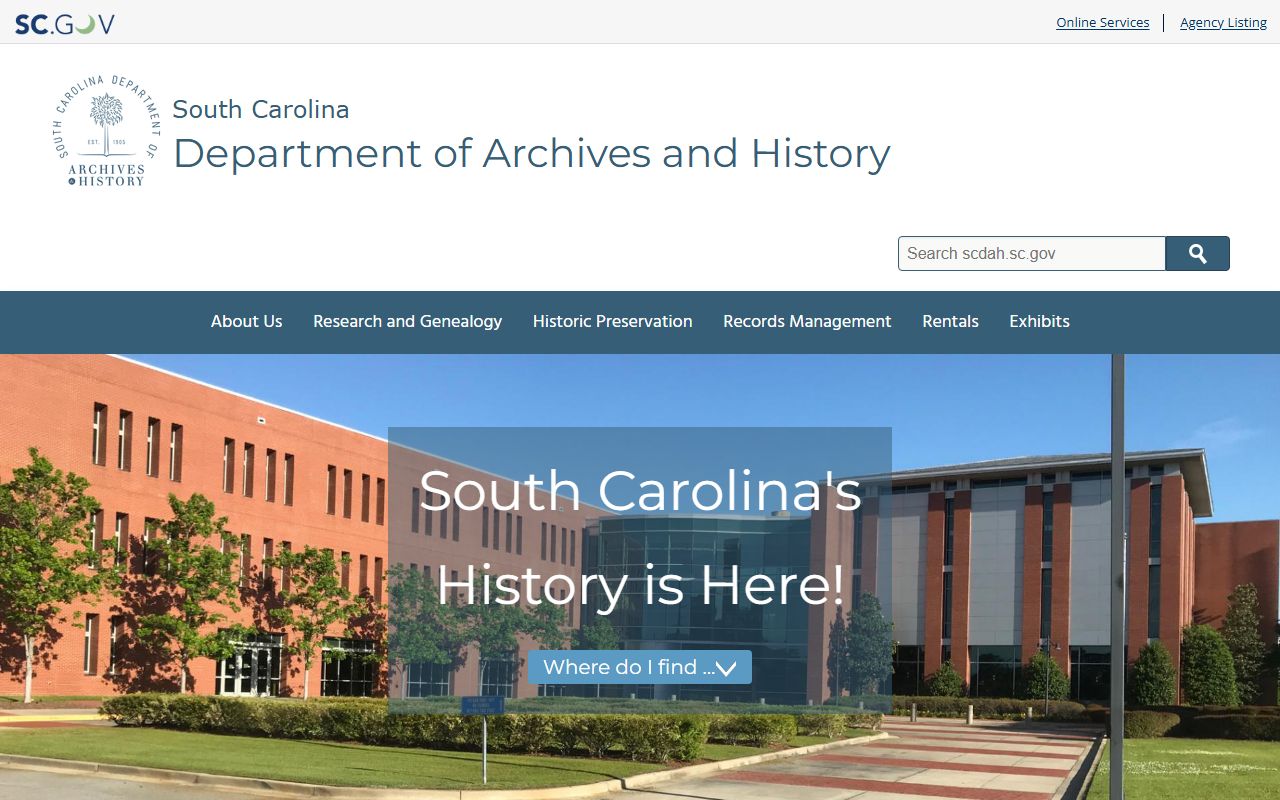
The SCDAH also offers research assistance and has staff available to help identify which collections may contain the records you are looking for.
FamilySearch offers free access to South Carolina death records from 1915 to 1965 through its online database. This is one of the largest free genealogy platforms in the world. The CDC also maintains a guide specifically for South Carolina vital records that points researchers to the right offices and resources. Cyndi's List and USGenWeb both have South Carolina sections with links to additional free databases and county-level resources.
Note: Many pre-1915 deaths in South Carolina were recorded only at the local level. County deed books, church registers, and cemetery transcriptions are often the most reliable sources for deaths in the 1800s and earlier.
Online Death Records and Indexes for South Carolina
Several online platforms provide access to South Carolina death records and indexes at no cost or through a subscription. Knowing which platforms to use can speed up a search considerably.
The SC Department of Public Health maintains its own death indexes and genealogy page at dph.sc.gov. This resource includes searchable index data for deaths registered in South Carolina. It is a direct, state-maintained source and is a good first stop for any online search.
The DPH death indexes page is shown in the screenshot below, with links to searchable data and guidance for genealogy researchers.
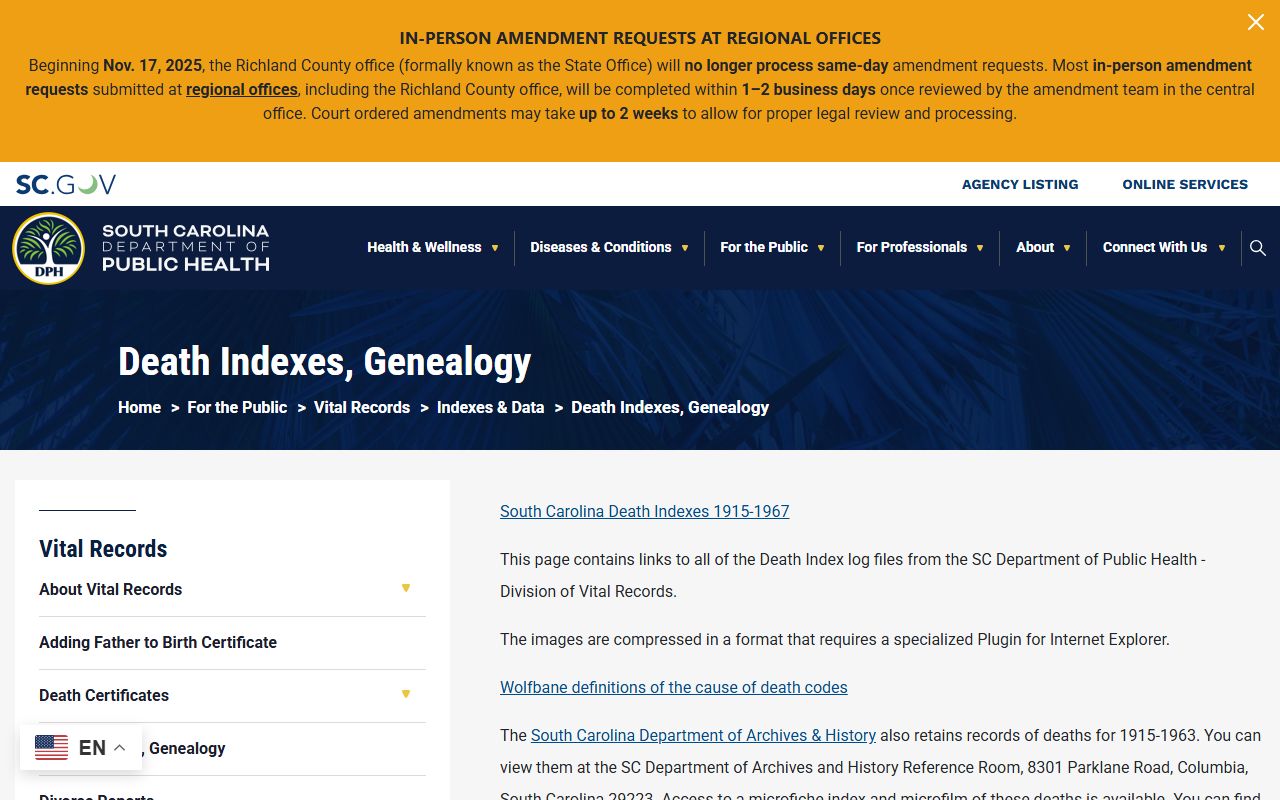
The DPH index data covers a broad range of years and is updated as new records become eligible for public release under the 50-year rule.
FamilySearch provides free access to South Carolina death records from 1915 through 1965. The platform is run by a nonprofit organization and does not require a paid subscription. Volunteers have indexed thousands of records, making name searches faster than browsing microfilm. FamilySearch is available at familysearch.org and covers deaths from many South Carolina counties.
VitalChek is the state's authorized online vendor for ordering certified death certificates directly. It is not a free research tool but a way to order official documents. The platform is available around the clock and processes orders within five to seven business days in most cases. Third-party vendor fees apply in addition to the state fee.
VitalChek is one of two authorized vendors for South Carolina; GoCertificates.com is the other. Both are listed on the DPH website as approved platforms for online orders.
The SC State Library has a genealogy research guide that points users to death records, census data, and other historical resources available in its collections. The guide is free online and covers both digital and physical materials held at the library.
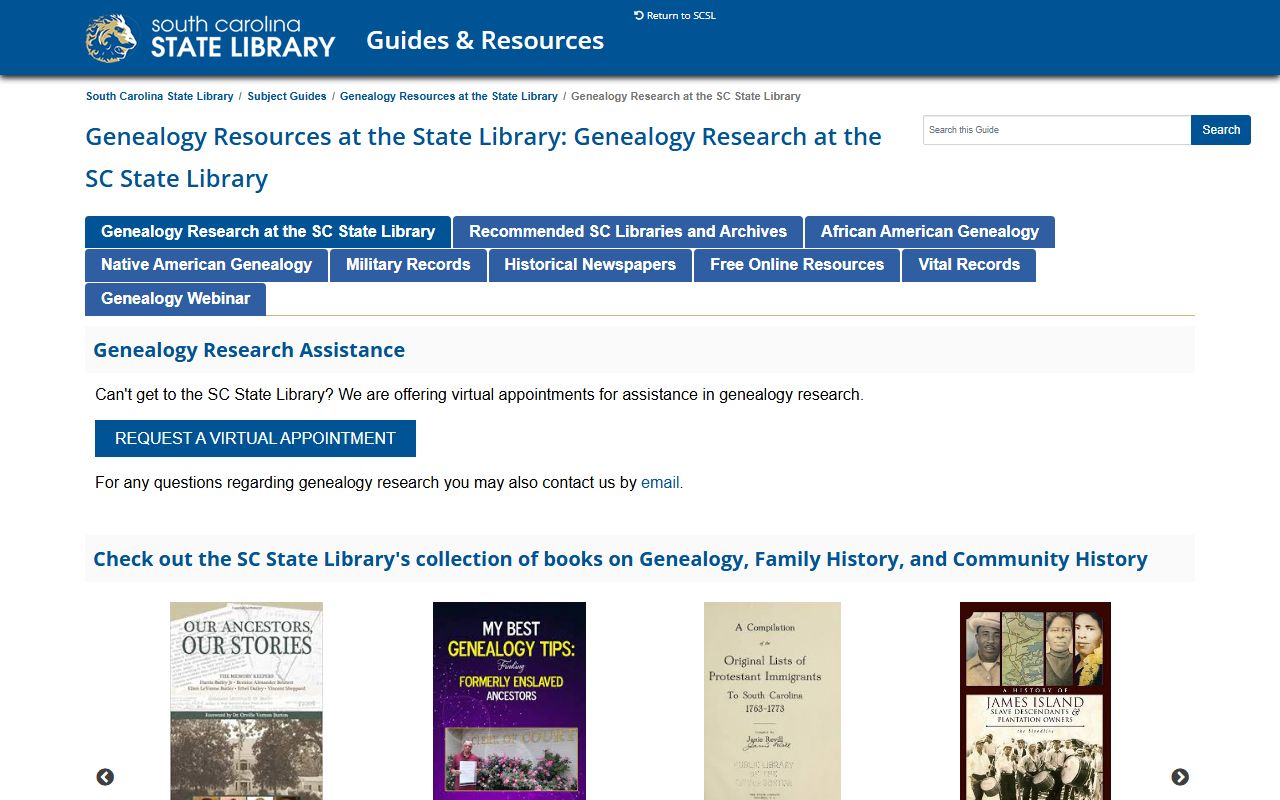
The SC State Library's genealogy guide is especially useful for researchers who want to combine death records with census, land, and court records to build a complete family history.
The CDC publishes a "Where to Write" guide for South Carolina that tells researchers which state office handles which type of vital record. This guide is a reliable reference because it is maintained by a federal agency and updated when state offices change.
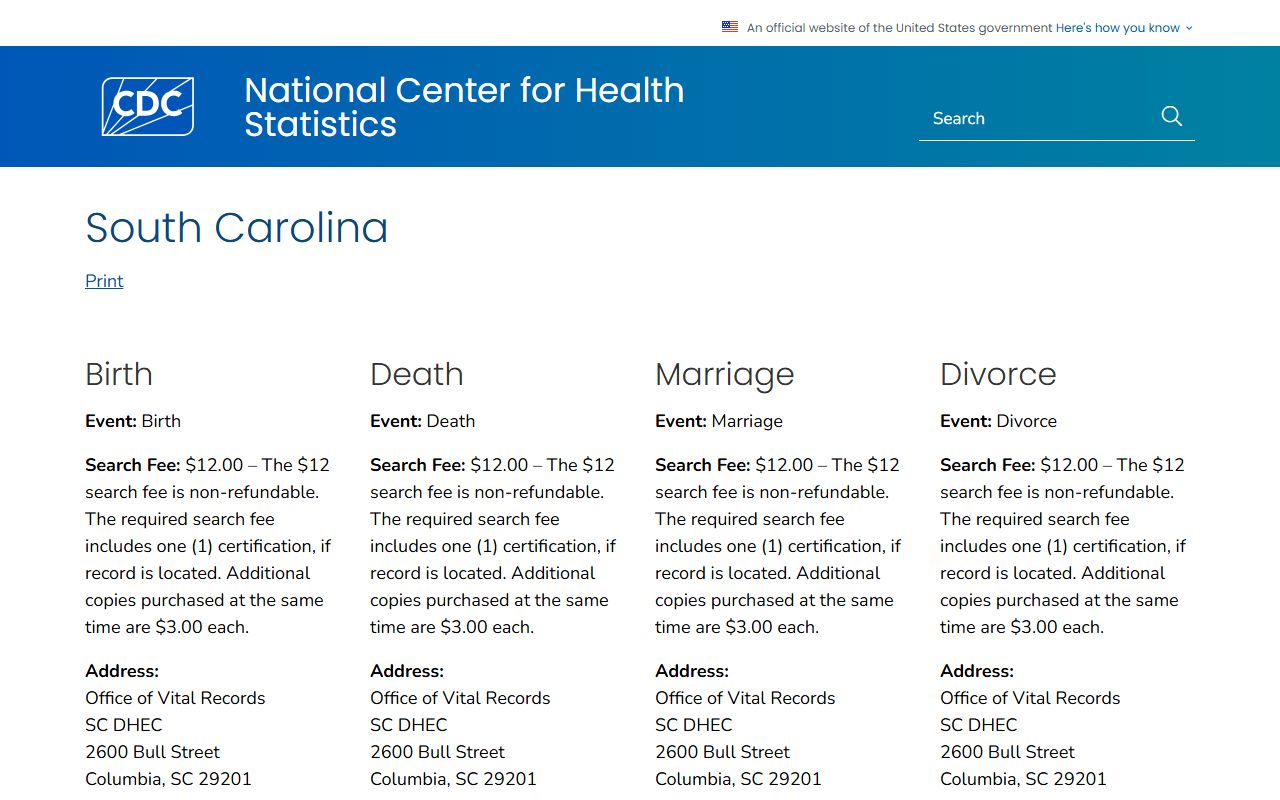
The CDC guide also provides background on what information is typically included in state death certificates and how to interpret the data you find.
Several independent genealogy platforms also cover South Carolina death records. USGenWeb and Cyndi's List both link to free databases, county resources, and volunteer-transcribed records. Death Indexes and Genealogy Trails provide searchable or downloadable death data for many South Carolina counties.
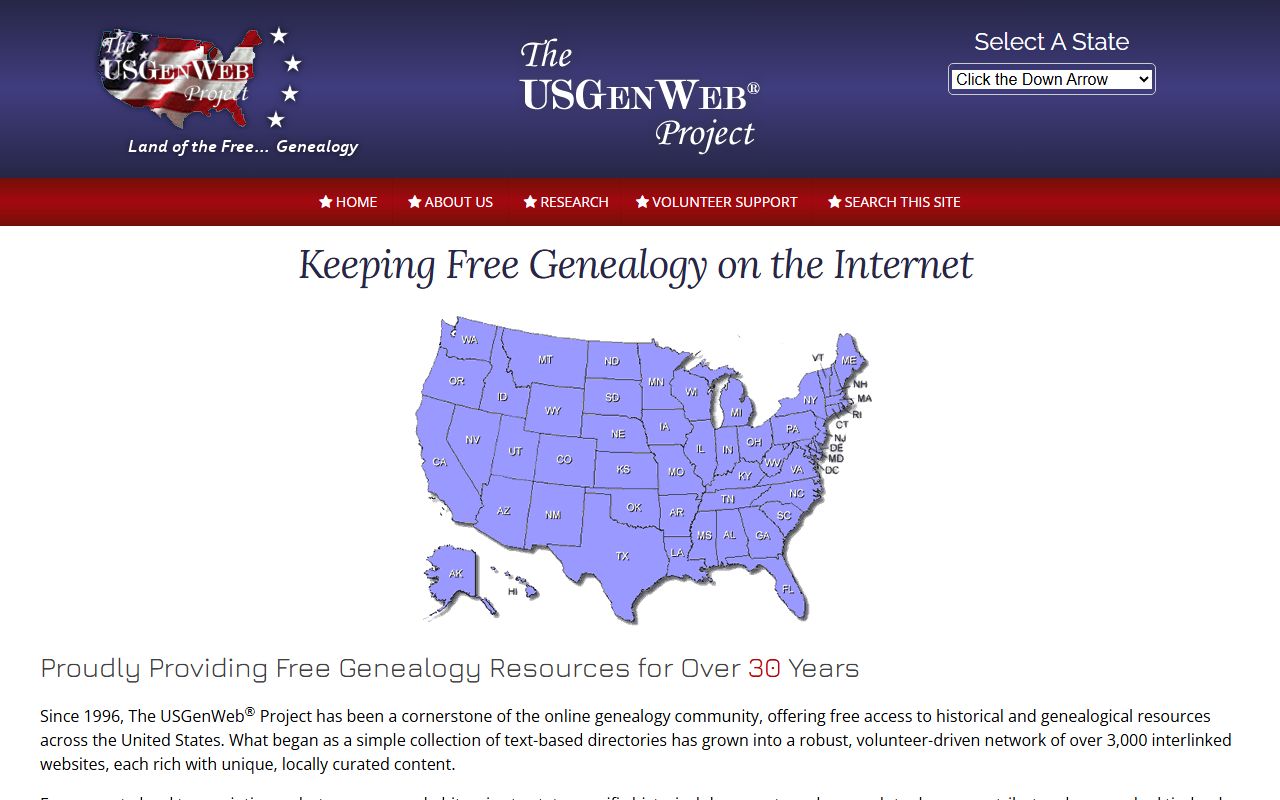
USGenWeb is a volunteer-run project that organizes free genealogy resources by state and county, making it easy to find county-specific death records and indexes for South Carolina.
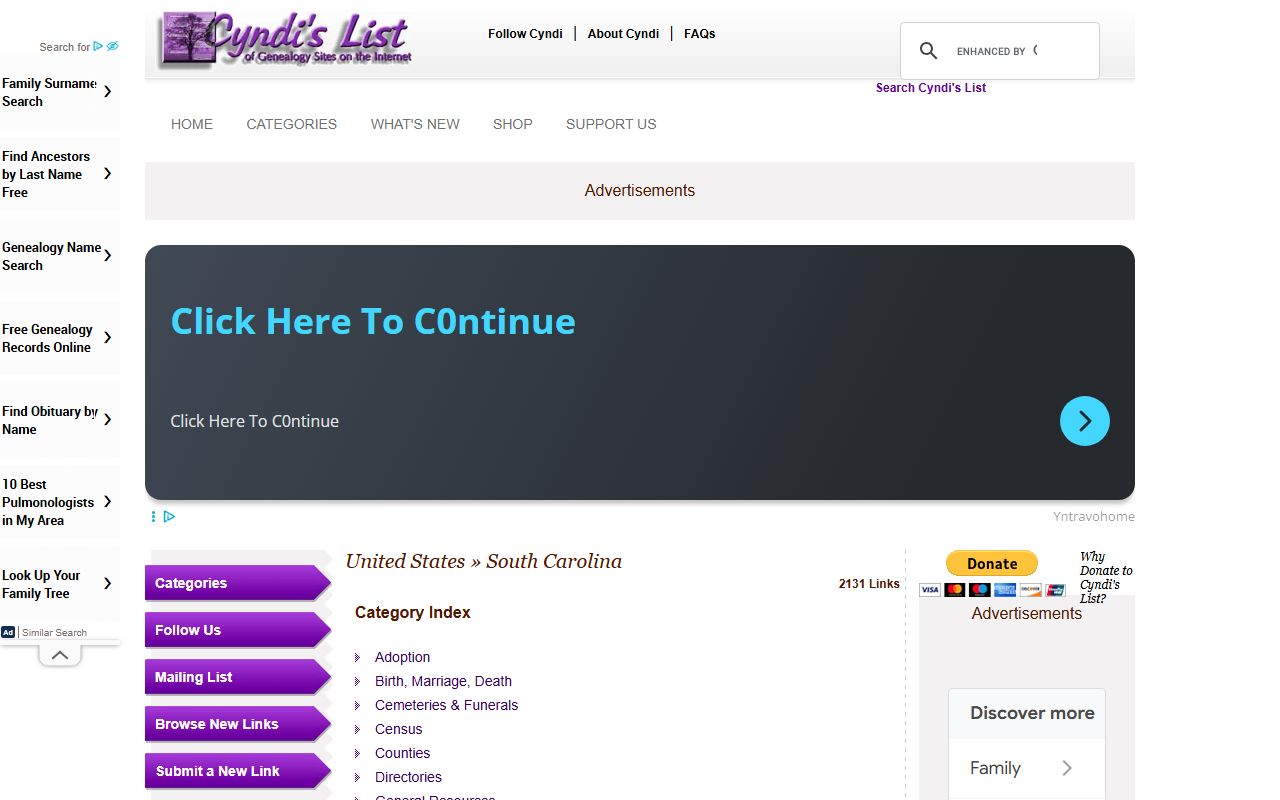
Cyndi's List organizes links to thousands of genealogy websites and is a good starting point when you are not sure where to look for a particular type of record.
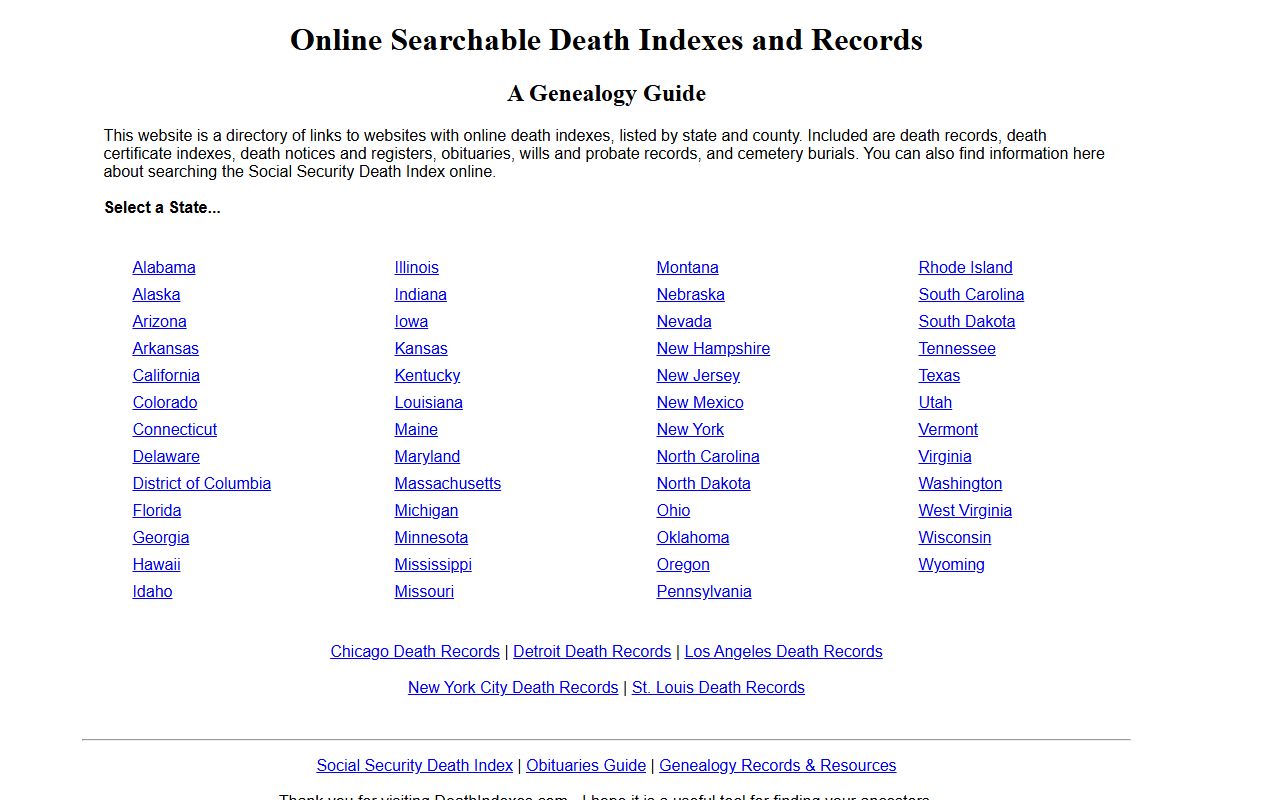
Death Indexes compiles links to publicly accessible death indexes across the country, with South Carolina records listed by year and county where available.
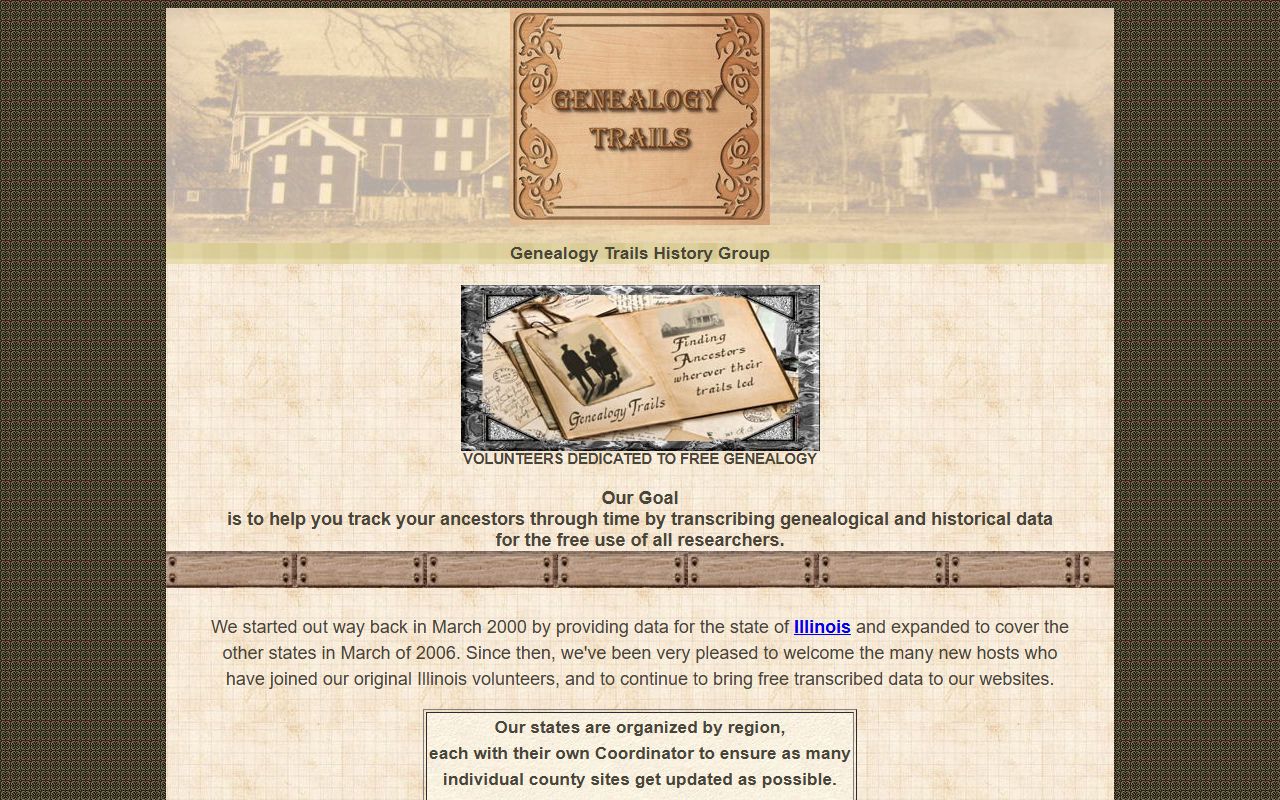
Genealogy Trails hosts free, volunteer-transcribed death records for many South Carolina counties and is a good supplement to the indexes available through DPH and FamilySearch.
SCIWAY is a South Carolina-focused web directory that lists local resources across the state, including links to county offices, genealogy groups, and historical societies that may hold death records not available online.

SCIWAY is especially helpful for finding contact information for local historical societies and libraries that hold unique local records not indexed anywhere else.
The SC State Library also maintains a main website with access to digital collections and research services that go beyond the genealogy guide.
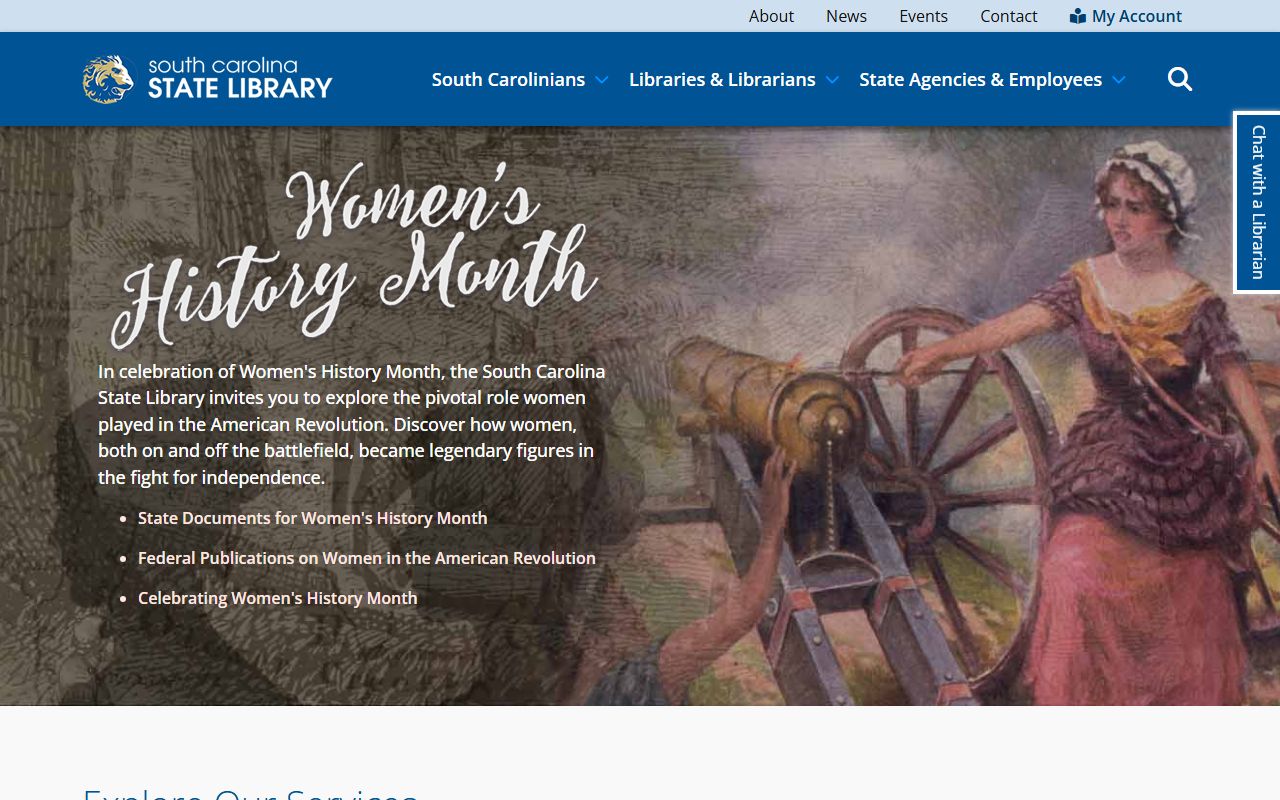
The State Library is a free public resource, and many of its digital collections are accessible from home without a visit to the physical building in Columbia.
Browse South Carolina Death Records by County
Each of the 46 counties in South Carolina has its own records and resources. Searching by county can help narrow results when you know the approximate location of a death. The most populous counties are listed below.
Death Records in South Carolina Cities
South Carolina's largest cities each have resources for locating death records locally. Whether you are searching for a recent certificate or historical data, browsing by city can point you to the right local office or record collection.